Decoding the Neuromuscular Grid: A New Paradigm for Athletic Precision
The pursuit of elite performance has long been a battle against biological ambiguity. Traditional metrics—speed, power, endurance—are merely surface-level outputs of a vastly more complex internal system. At Bio-Kinetic, we have shifted the focus inward, to the very grid where intention becomes action: the neuromuscular junction. Our latest research introduces a high-resolution mapping protocol that captures the electrical and mechanical dialogue between the nervous system and skeletal muscle in real-time, creating a dynamic blueprint of human velocity.
This is not simply enhanced motion capture. We deploy an array of micro-mechanical sensors embedded within the training environment—from the track surface to the handle of a rowing ergometer. These sensors detect force vectors, micro-vibrations, and latency periods with millisecond precision. The data feeds into a physiological grid, a living model that visualizes stress-load distribution across the kinetic chain. The system identifies not just where force is applied, but how it is transmitted through bone, tendon, and fascia. This allows for what we term "neuromuscular correction"—a real-time feedback loop that guides an athlete's nervous system towards more efficient, structurally sound movement patterns before fatigue or compensatory habits set in.

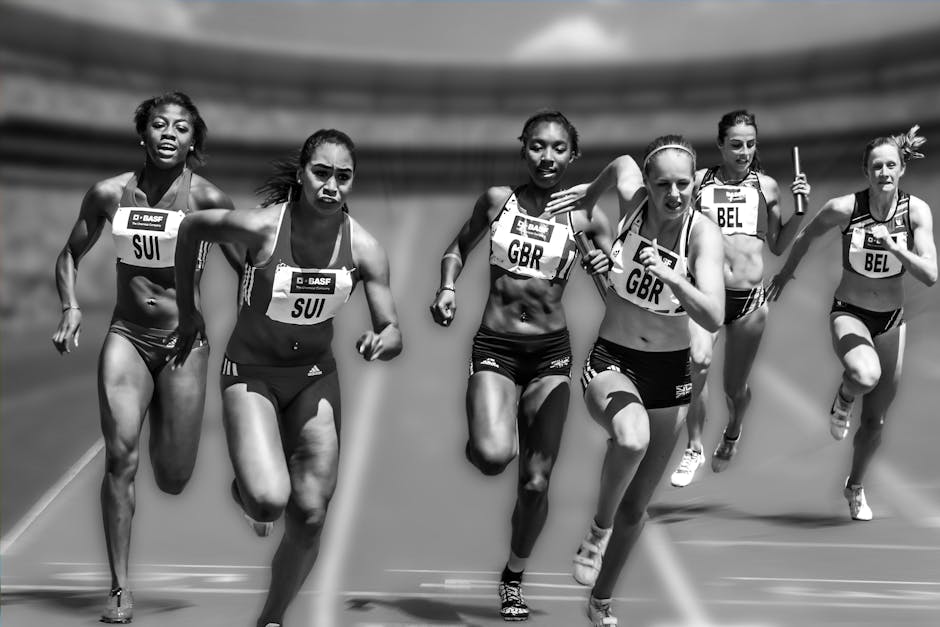
Figure 1: Real-time neuromuscular grid visualization during a sprint analysis.
Localized Skeletal Modeling and Bio-Equilibrium
The cornerstone of our methodology is localized skeletal modeling. Instead of treating the body as a single lever, we model each major joint complex—shoulder, hip, knee, ankle—as an independent, yet interconnected, mechanical system. By applying finite element analysis principles, we can predict stress concentrations and potential failure points under specific loads. This modeling is fused with cellular recovery data, measured through non-invasive metabolic assays, to understand the tissue's readiness for adaptive stress.
The ultimate goal is bio-equilibrium: a state where external mechanical demand is perfectly balanced by the body's internal capacity for force production and recovery. This moves us beyond the outdated model of "no pain, no gain." Forced exertion often leads to breakdown; bio-equilibrium leads to sustainable, peak structural performance. An athlete in bio-equilibrium exhibits mechanical clarity—every movement appears effortless because the kinetic energy is flowing along the path of least internal resistance.
"Velocity is not created by muscles alone, but by the precision of the signal that commands them. We are now programming the nervous system for optimal mechanical output."
The Future: Adaptive Movement Protocols
The final layer is the development of adaptive movement protocols. Based on the continuous stream from the neuromuscular grid and skeletal models, our AI-driven platform can suggest micro-adjustments to an athlete's technique in real-time. It can also design highly personalized training stimuli that target specific neuromuscular pathways, strengthening the communication lines between brain and muscle.
This integrated approach—combining sensor telemetry, biomechanical modeling, and cellular data—represents the future of performance optimization. It's a shift from coaching the body to engineering its native capacity for movement. The blueprint for human velocity is being redrawn, not with broader strokes, but with infinitely finer, data-driven lines.